Sep 28, 2026Buying Guides
12V vs 24V Jump Starters: Which One Fits Trucks, Fleets and Workshops
A practical buyer's guide to 12 V and 24 V jump starters: which fits trucks, fleets and workshops, with key specs from the JinYaoe catalog.
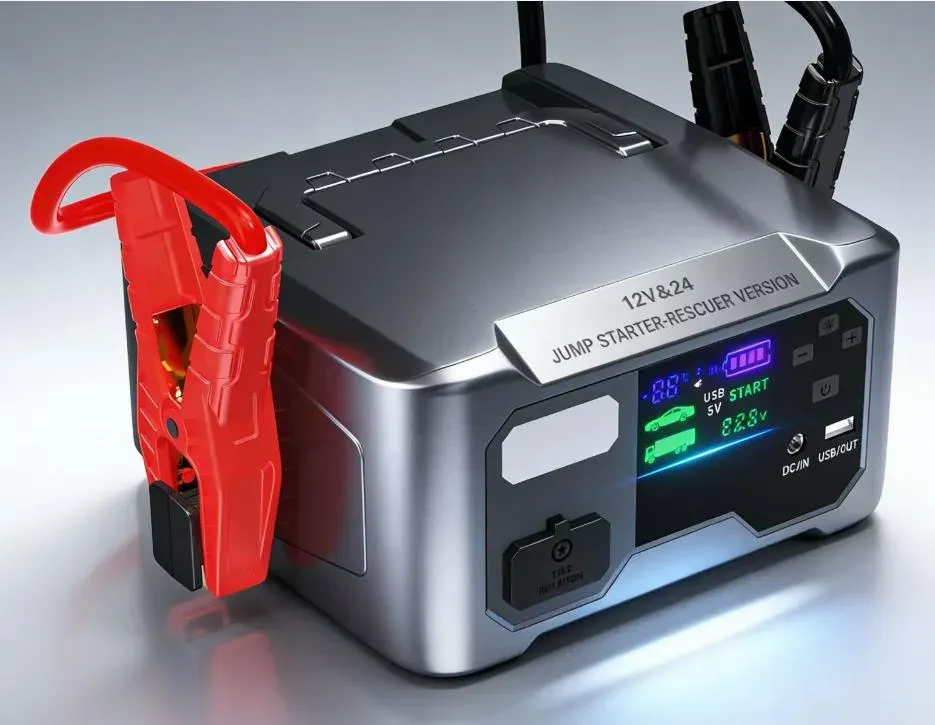
Your yard runs on a schedule. The delivery vans and light pickups start first thing, but the heavy rig parked overnight clicks once and goes quiet. Two vehicles, two electrical systems, and one jump starter that cannot serve both. This guide compares 12 V and 24 V jump starters so you can match every unit you buy to the vehicles you actually run.
QUICK ANSWER
12 V for cars and light diesel, 24 V (or dual 12 V & 24 V) for heavy trucks.
01 WHAT THE VOLTAGE MEANS
Voltage describes the electrical system a vehicle is built around, not a power level you can pick at will. Passenger cars and light commercial vehicles run 12 V systems. Heavy trucks run 24 V systems, and their starters must match. A dual unit can output both voltages from one device, but the vehicle decides which setting you use.
02 WHEN 12 V IS ENOUGH
A 12 V starter is enough when every vehicle in your operation is a petrol car or light truck. From the JinYaoe catalog, the L087 holds 20,000 mAh with a 3,000 A peak and starts up to 8.0 L gas or 4.0 L diesel. The L013 holds 24,000 mAh with an 8,000 A peak and starts up to 12.0 L gas or 10.0 L diesel. If your engines fall inside those limits, a 12 V unit may be all you need.
03 WHEN YOU NEED 24 V
You need 24 V when heavy trucks enter the picture. These vehicles are built on 24 V electrical systems, so a 12 V starter will not match them. The 24 V rating is a requirement of the truck, not an optional upgrade. If your fleet includes large diesels or 36-tonne trucks, look for a unit that outputs 24 V.
04 DUAL-VOLTAGE UNITS FOR MIXED FLEETS
Mixed fleets are the classic case for a dual unit. The same yard can hold vans on 12 V and rigs on 24 V. A dual 12 V & 24 V starter switches between the two, so one device serves both groups. That means one purchase to manage and one device to keep on the shelf.
05 TWO TRUCK MODELS TO COMPARE
Two dual-voltage models from the JinYaoe catalog show how truck units compare. The L090 is the larger and more powerful of the two, while the LF39 is smaller and lighter. Both output 12 V and 24 V.
L090
The L090 holds 63,000 mAh (233.1 Wh) and peaks at 10,000 A. It starts up to 32.0 L gas or 19.0 L diesel. If your biggest engines call for the highest peak rating in this comparison, the L090 is the model to check first.
LF39
The LF39 holds 56,000 mAh (207 Wh) and peaks at 4,000 A. It starts up to 17.0 L diesel or 36-tonne trucks. Compare it with the L090 on weight, footprint and the engine sizes you run, and let the model spec decide.
06 WHAT ELSE TRUCK UNITS CARRY
The L090 also carries a 150 PSI tire inflator, so one unit handles starting power and tire pressure on the road. Both truck models are sized for real use: the L090 measures 257 x 217 x 123 mm and weighs 3.25 kg, the LF39 measures 213 x 166 x 112 mm and weighs 2.5 kg.
BUYING FROM A FACTORY
Guangzhou JinYaoe Technology Co., Ltd. states it has manufactured jump starters for 18 years and runs 200+ workers and performs 100% QC before delivery, with a 12-month warranty on all products. Jump starters in the catalog carry CE, FCC, ROHS, MSDS and UN38.3; battery chargers carry CE, FCC, ROHS and PSE. The company states it exports to 141 countries.
Ordering is set up for importers and fleet buyers. The company states there is no minimum order quantity, so you can start with a small batch, and fast delivery within 3 days keeps your stock moving.
MATCH THE UNIT TO YOUR FLEET
Match the unit to the vehicles in your yard: 12 V for cars and light diesels, 24 V or a dual unit for heavy trucks. Browse the JinYaoe product pages for full spec sheets, or send your vehicle list to the team and let them confirm the right model before you buy.