Sep 28, 2026Buying Guides
Jump Starter Capacity and Peak Amps: What the Numbers Mean for Your Engine
What 20,000 mAh and 3,000 A actually do for your engine, and how to match capacity, starting amps, peak amps and voltage to the vehicles in your fleet.
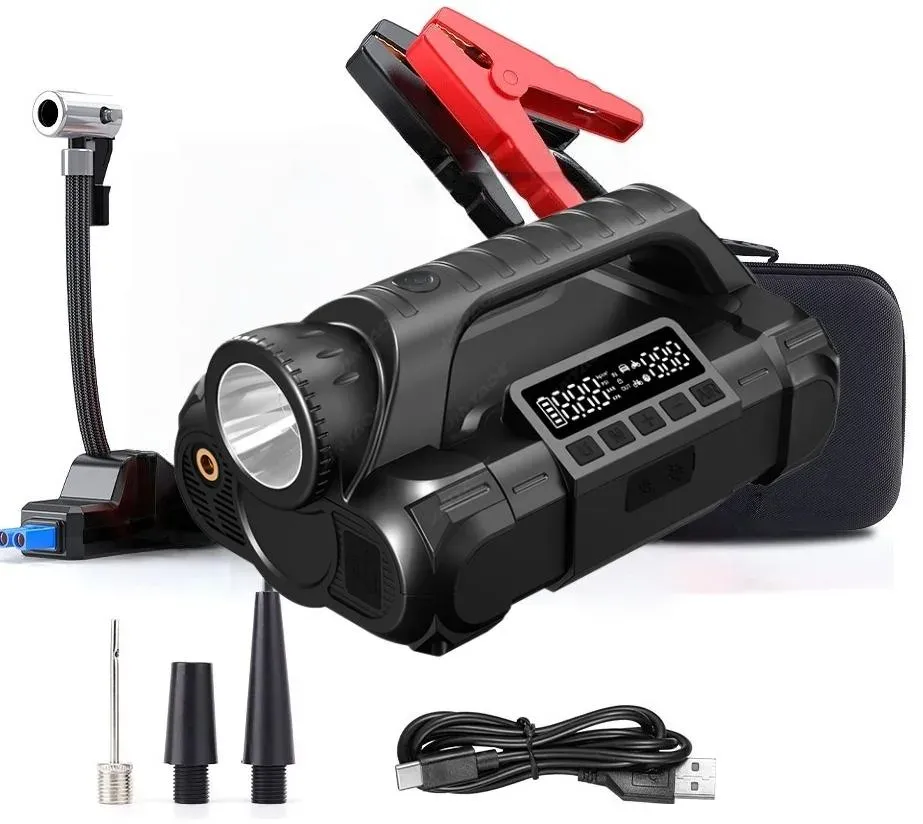
You are comparing two jump starter listings. One says 20,000 mAh. Another says 3,000 A peak. Both numbers look important, but they measure completely different things. This guide explains what each number does for your engine, so you can read any spec sheet and match the right unit to your vehicles.
QUICK ANSWER
mAh is stored energy, peak amps is burst power, and engine litres decide what you need. Capacity tells you how many starts a unit delivers before recharging. Peak current tells you whether it can deliver the short, strong burst your engine demands.
01 CAPACITY: HOW MANY STARTS
Capacity, shown in mAh or Wh, measures stored energy. It decides how many starts you get before the unit needs recharging. Wh is the more direct energy measure: 10,400 mAh equals 38.48 Wh in the JinYaoe LK2, with a catalog figure of over 20 uses on a full charge. Larger numbers mean more starts, so a truck used all day may prefer a bigger pack.
The same line also helps you compare models fairly. The L087 stores 74 Wh at 20,000 mAh, the L013 stores 88.8 Wh at 24,000 mAh, and the L090 stores 233.1 Wh at 63,000 mAh. If your team jumps many vehicles between charges, a higher Wh rating means fewer interruptions.
02 PEAK AMPS VS STARTING AMPS
Spec sheets list two current figures, and they do different jobs. Starting amps is the sustained cranking current the unit can hold while the engine turns over. Peak amps is the maximum short burst available for a brief moment. The L087 shows both: 1,500 A starting and 3,000 A peak. The peak figure sounds bigger, but starting amps is the number that does the steady work.
HOW THE TWO NUMBERS WORK TOGETHER
The two figures work on the same start. The peak burst is available for the instant the circuit closes, while the starting current carries the cranking that follows. When you compare units, check both numbers rather than only the larger peak figure.
03 MATCHING ENGINE SIZE
Larger engines and diesels need more current to crank. The manufacturer rates each model by engine size, so buyers can match a unit to their fleet. The L087 covers up to 8.0 L gas and 4.0 L diesel. The L013 covers up to 12.0 L gas and 10.0 L diesel. The L090 reaches 32.0 L gas and 19.0 L diesel.
DIESEL DRAWS MORE CURRENT
On every model above, the diesel limit sits below the gas limit, because diesel engines draw more current when cranking. If your fleet mixes both fuel types, check the diesel rating first; it is the tighter constraint.
04 WHY TRUCKS USE 24 V
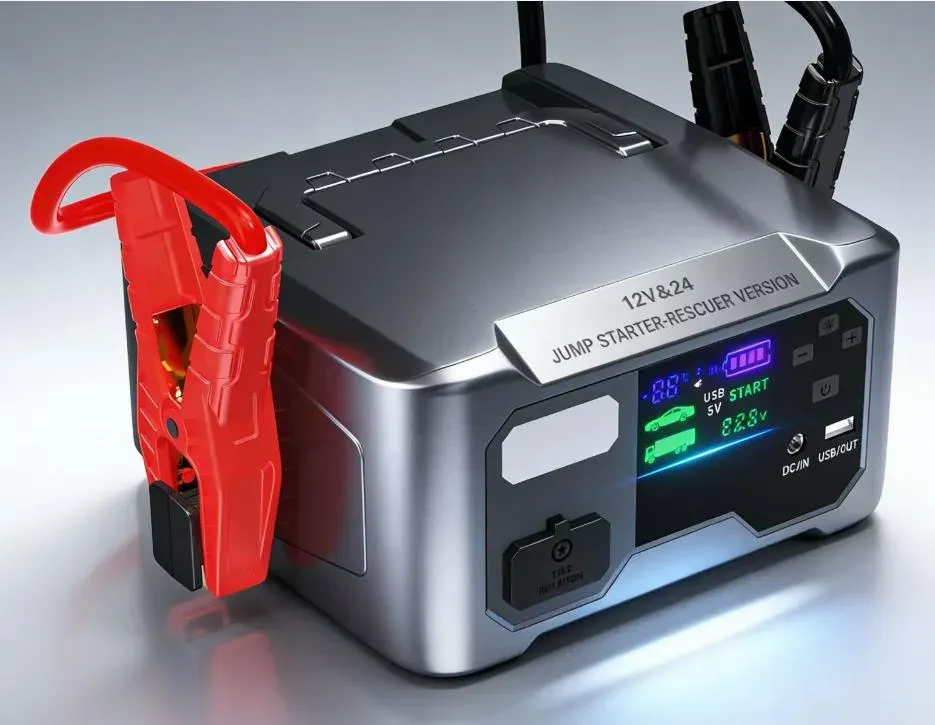
Heavy trucks run 24 V electrical systems, while cars and light vehicles run 12 V. A 12 V jump starter cannot start a 24 V truck, so manufacturers build dual-voltage units for mixed fleets. The L090 and the LF39 both offer 12 V and 24 V, and the LF39 is rated for up to 17.0 L diesel or 36-tonne trucks.
Voltage is the first filter when you choose. Confirm the unit covers your vehicle's electrical system before you compare amps or capacity. The supported voltage appears on the spec sheet, so a quick check prevents a mismatched purchase.
05 READING A SPEC SHEET
To see how the pieces fit, take one line from the JinYaoe catalog and read it number by number. The L090 is the largest model in the examples below, so it shows the fullest picture.
L090: 63,000 mAh, 233.1 Wh, 5,000 A starting, 10,000 A peak, 12 V and 24 V, for up to 32.0 L gas and 19.0 L diesel.
First, 63,000 mAh and 233.1 Wh describe stored energy: the unit holds enough charge for repeated starts before recharging. Next, 5,000 A starting is the sustained cranking current, and 10,000 A peak is the maximum short burst. Then 12 V and 24 V shows the unit covers both cars and heavy trucks. Finally, 32.0 L gas and 19.0 L diesel mark the largest engines it is rated to start.
Apply the same order to any listing: energy first, current second, voltage third, engine rating last. If a listing shows only a peak figure, find the starting current in the full spec before you decide. Reading all four lines turns a wall of numbers into a clear match for your engine.
BUYING FROM A FACTORY
If you buy for a business, the factory behind the unit matters as much as the numbers on it. Guangzhou JinYaoe Technology Co., Ltd. states it has manufactured jump starters for 18 years, with 200+ workers and 100% QC before delivery. The company states every unit ships with a 12-month warranty and the brand exports to 141 countries.
The catalog carries CE, FCC, ROHS, MSDS and UN38.3 certifications across its jump starters. The company states orders stay flexible for businesses of any size: no minimum order quantity, and fast delivery takes 3 days.
NEXT STEP
You now know what each number on a jump starter listing does for your engine. Compare the LK2, L087, L013, L090 and LF39 against your largest engine and your fleet's voltage, then browse the product catalog or contact the JinYaoe team with your vehicle types. A short conversation today beats a truck that will not start tomorrow.